
Helps the fish stay upright and may be used in display behavior.
Fish guide
Aquarium fish anatomy
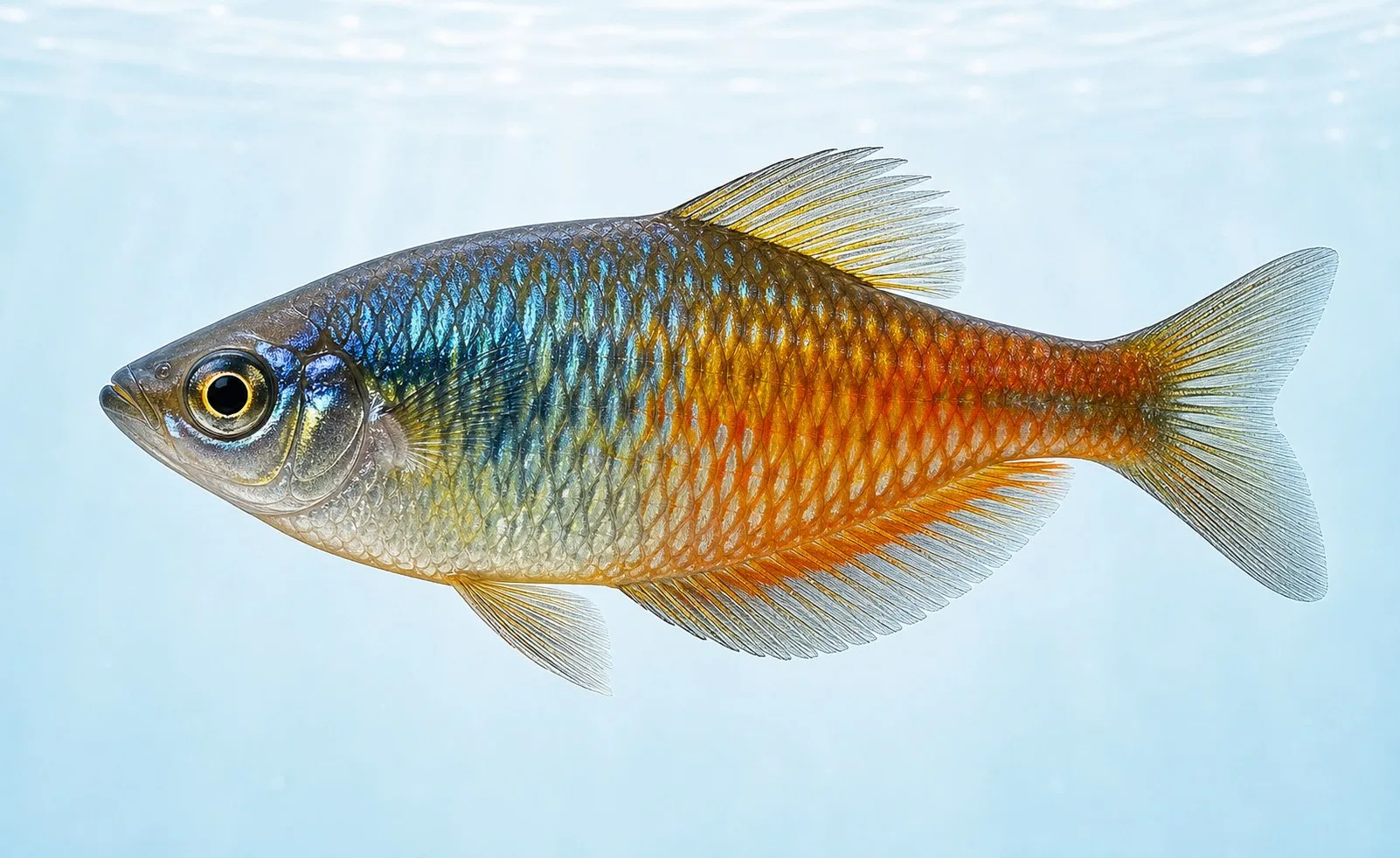
Understanding the main external parts of a fish helps you read profiles, observe behavior, spot injuries and compare species.
Anatomical landmarks
A realistic visual to quickly locate the mouth, eye, scales, gills, fins and tail.
What are fins used for?
Each fin contributes to balance, propulsion or changes of direction.
The tail fin is essential for acceleration and rhythm changes.
Used to brake, pivot, hover or move slowly.
Stabilize the body, especially near the bottom or while turning.
Complements the dorsal fin and helps control the body axis.
Its position often indicates the feeding zone: surface, open water or bottom.
Observe accurately
Good visual observation often reveals stress, injury or incompatibility early.
Clamped fins. May indicate stress, fatigue, poor water quality or intimidation.
Damaged edges. Watch for fins that tear, whiten or recede.
Fast breathing. Observe the gills, the surface and the other fish in the tank.
Unusual swimming. A fish that leans, floats or isolates itself deserves a parameter check.
Continue exploring
These pages complement anatomy so you can identify, compare and keep species more reliably.