
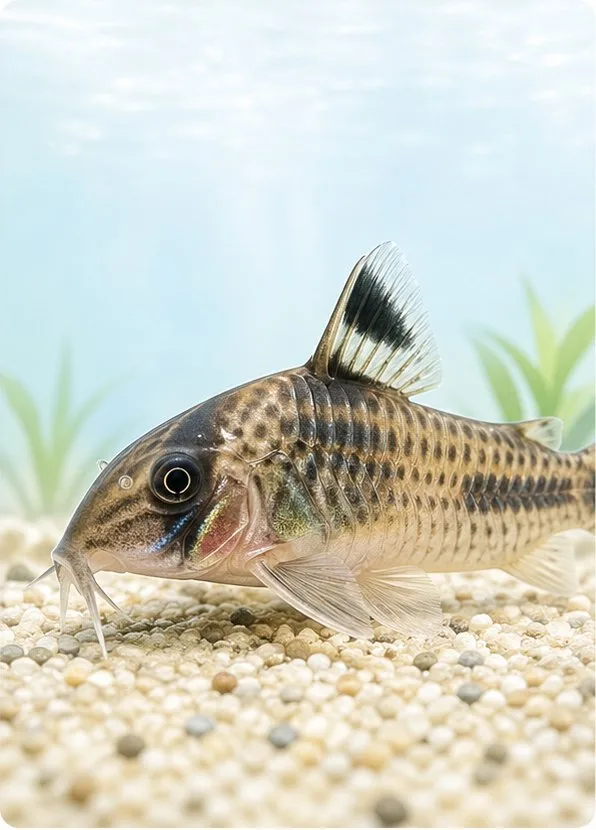
Inferior mouth
Pointing downward, it often indicates feeding on the bottom or substrate.
Fish guide
The position of the mouth gives clues about feeding, swimming zone and natural behavior.
Looking at the mouth helps you understand where and how the fish looks for food.
Pointing downward, it often indicates feeding on the bottom or substrate.
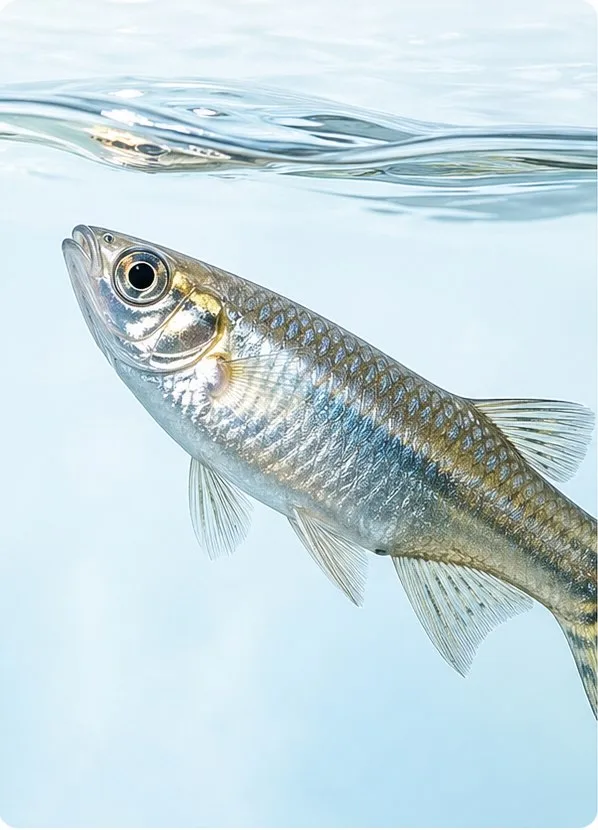
Pointing upward, it suits fish that take food at the surface.
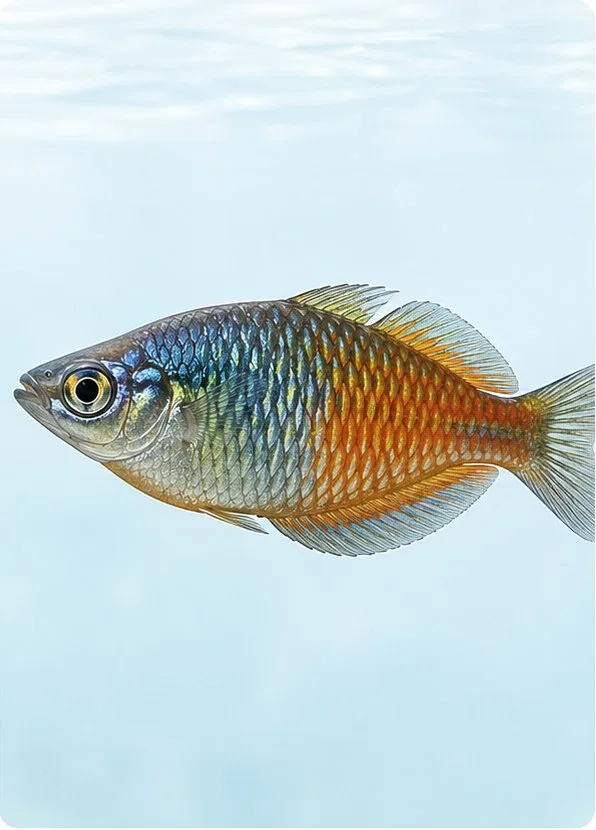
Placed on the body axis, it is common in open-water species.
The mouth complements profile data: diet, swimming zone, cohabitation and food distribution.
Surface. Fish with superior mouths may miss food that sinks too quickly.
Bottom. Species with inferior mouths need accessible, non-cutting substrate.
Open water. Terminal mouths are often linked to active swimming in the middle of the tank.
Cohabitation. Varying feeding zones limits competition.
The mouth should be read with anatomy, tail shape and keeping needs.