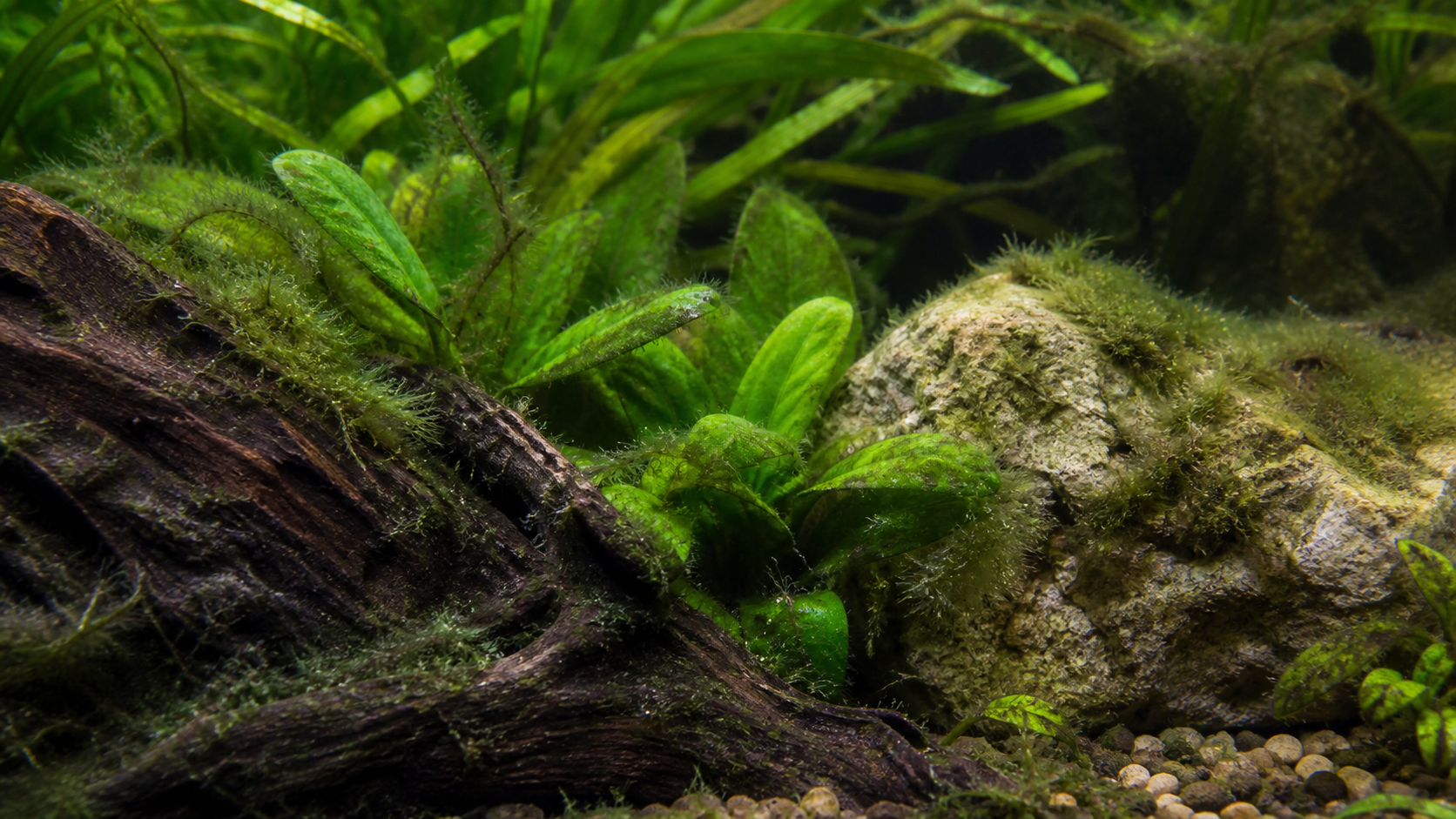
Use this guide to compare the real needs of Aquarium algae before changing the aquarium. Always relate the observation to the age of the tank, water tests and recent changes. Stable parameters are usually safer than chasing a perfect number.
Before acting, identify the context: recent appearance, lighting, maintenance, fish density and plant growth.
Look at volume, water, behavior and warning signs together instead of deciding from one detail. Small regular actions are safer than sudden large corrections.
Always relate the observation to the age of the tank, water tests and recent changes.
Frequent causes
Algae take advantage of an imbalance. Acting on the cause avoids cleaning the same area every week.
LightUnsuitable duration or intensity
A good choice is also knowing when the aquarium is not suitable. Compare plant needs before changing the aquarium.
NutrientsExcess or imbalance
Connect pH, hardness, temperature and stability. Small regular actions are safer than sudden large corrections.
PlantsInsufficient growth
Compare plant needs before changing the aquarium.
PopulationHigh organic load
Compare size, water, volume and behavior. Most failures come from rushing, mixing incompatible needs or correcting everything at once.
CirculationDead spots
Always relate the observation to the age of the tank, water tests and recent changes.
Young tankImmature balance
Stable parameters are usually safer than chasing a perfect number.
Recognize the main types
Appearance often gives a clue, even when several factors combine.
Green algae
Often linked to light and nutrients. They may form spots on glass or filaments on decor.
Brown algae
Common in new or dimly lit tanks. They settle easily on leaves, glass and decor.
Filamentous algae
They take advantage of a lasting imbalance. Remove them by hand, but correct the cause first.
Black beard algae
Persistent, often visible on slow leaves, roots and filter outlets. They require regular care.
Green water
It is caused by suspended algae, often encouraged by strong light and available nutrients.
Bluish or slimy deposits
They may indicate cyanobacteria. Maintenance, circulation and lighting then need stricter control.
What to do in practice
The right strategy combines cleaning, gradual correction and observation. Miracle fixes rarely give lasting results.
Remove mechanically. Small regular actions are safer than sudden large corrections.
Reduce excess. Small regular actions are safer than sudden large corrections.
Adjust lighting. Stable parameters are usually safer than chasing a perfect number.
Strengthen plants. Compare plant needs before changing the aquarium.
Prevent them from returning
An aquarium without visible algae is above all an aquarium with consistent routines.
Stability
Small regular actions are safer than sudden large corrections.
Observation
Always relate the observation to the age of the tank, water tests and recent changes.
Compatibility
Open the detailed profiles before buying or treating anything.
Continue exploring
Algae are easier to understand when water, plants, stocking and maintenance are connected.