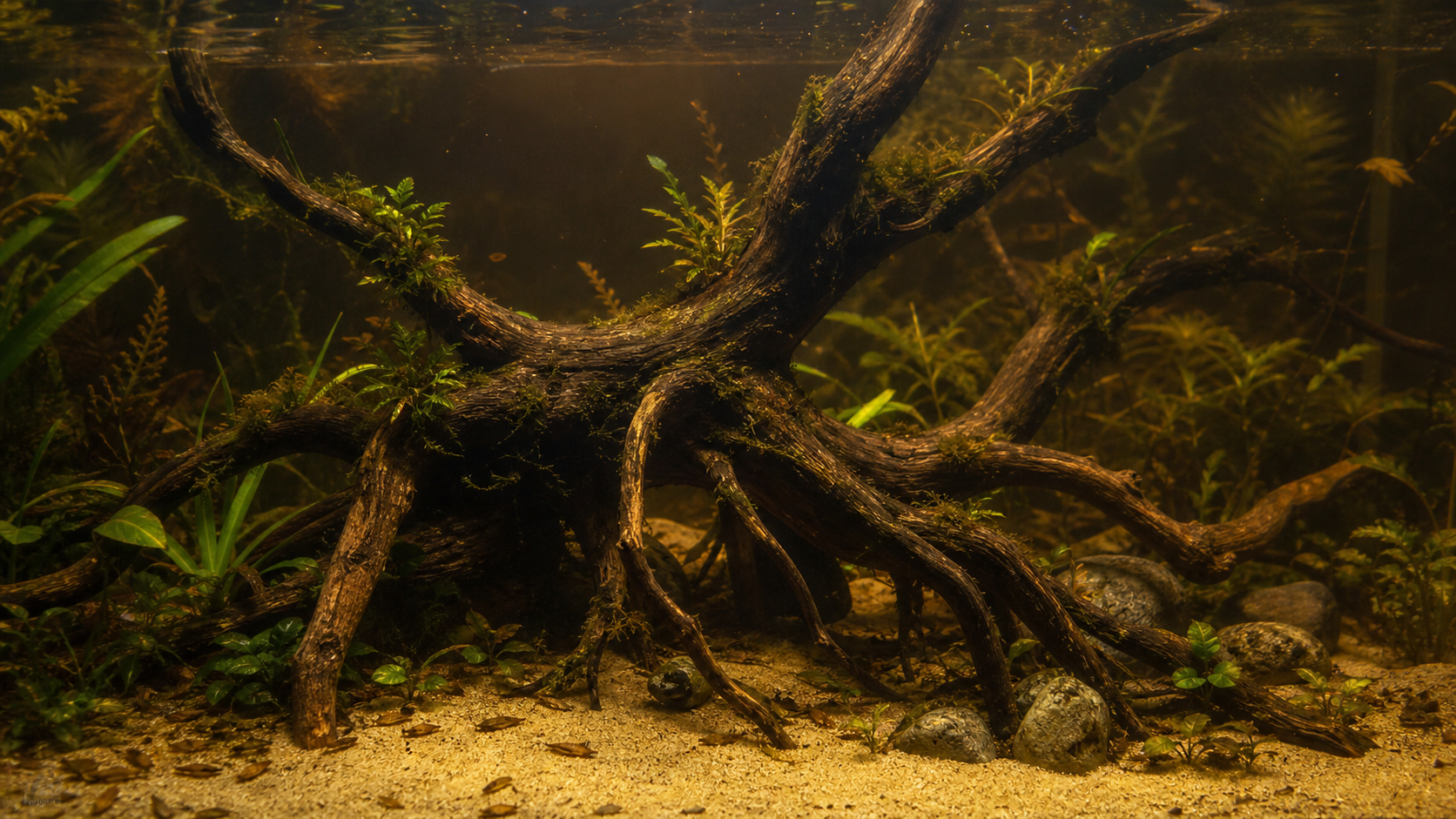
Roots in an aquarium

With rare exceptions, tree vegetation is practically always present on more or less scale in the natural environment of our aquarium fish. Sooner or later these trees will eventually fall into water and it is therefore normal to find roots or branches in the arrangement of our bins.

You can easily get stones in the wild, but this is not the case with the roots that are only available in aquariophile stores. The wood decomposing underwater, there is therefore only the peat bog roots which can be used since they can be kept in a natural way by the acidity of the surrounding environment. If you are fortunate to live near a peat bog, you can take advantage of a Sunday outing to prospect the land if it is not subject to a municipal ban (enter -you first). It is not an easy job, but if the use of large roots is essential, then the movement is paid.


Wood roots

wood roots for aquarium

Wood roots with their primitive shapes are very decorative in aquarium and particularly those from oaks , which are the most expensive. The personal taste and the available place will determine the choice of wood, and do not forget before the purchase of having a folding meter otherwise you will have the risk of going home with a root larger than the aquarium . Before being able to use these roots, it will first be necessary to remove all the detachable parts like the remains of bark or peat which remained between the forks, then they will be brushed vigorously and submerged in hot water.

This bath can extend several days by regularly changing the water which does not need to remain hot. This operation allows to the tannins which are contained in the wood to dissolve in the water, at least in part, which will then avoid that the aquarium has too amber coloring. These roots will gradually be full of water and will no longer float on the surface. But despite everything, you will not avoid the frequent water changes necessary at the start, during the layout of your tank with new roots to stop the brown-yellow color of the liquid element .

Large roots will surely not be able to, and this for reasons of space, be easily submerged for this operation, unless you requisition the bathtub for a while. You will therefore put them directly in the aquarium after a serious cleaning, then it will be necessary to make them with stones so that they do not rise to the surface.

The ballast will be connected to the root by steel wire, but it can also be used of stainless steel screws e. This ballast will remain in place and will be hidden with the soil substrate and the plants. In this way you will avoid surprise one day to see the root floating according to the current in the aquarium and having to start the decor again.


Chêne-Liège Ecorces

chêne-liège ecoces for aquarium

Chêne-cork bark can be used for the layout of your aquarium. Despite prolonged baths, cork absorbs very little water and therefore it has the disadvantage of exerting a strong vertical push .

A good ballast is necessary to keep them in place. Before putting them in the tank, it will of course be necessary to clean them carefully with a brush and then rinse them with hot water.

Aquarium fish

Poecilia latipinna

Poecilia latipinna

Dress of the gold color, with the exception of the lids and the muzzle which are intense blue. Yellow fins dotted with blue spots in the prettiest specimens. Dorsals bordered by a fine white border. T...